

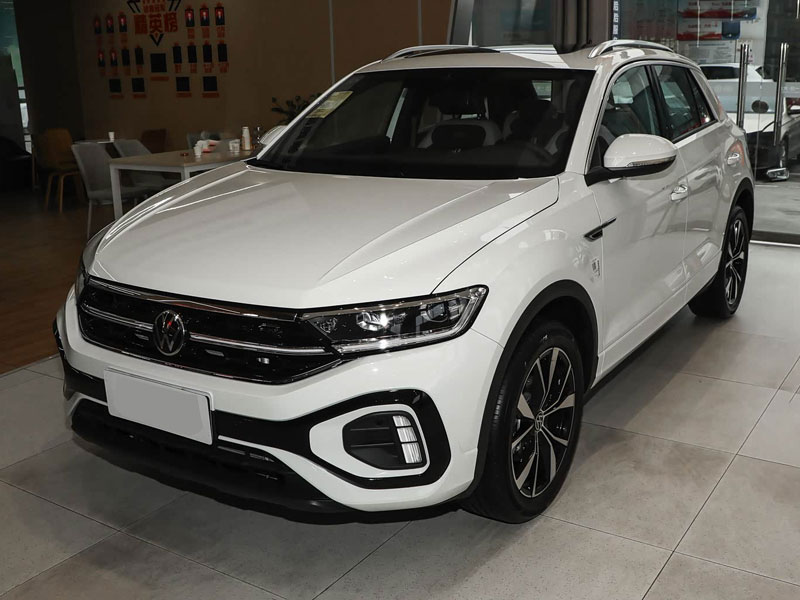
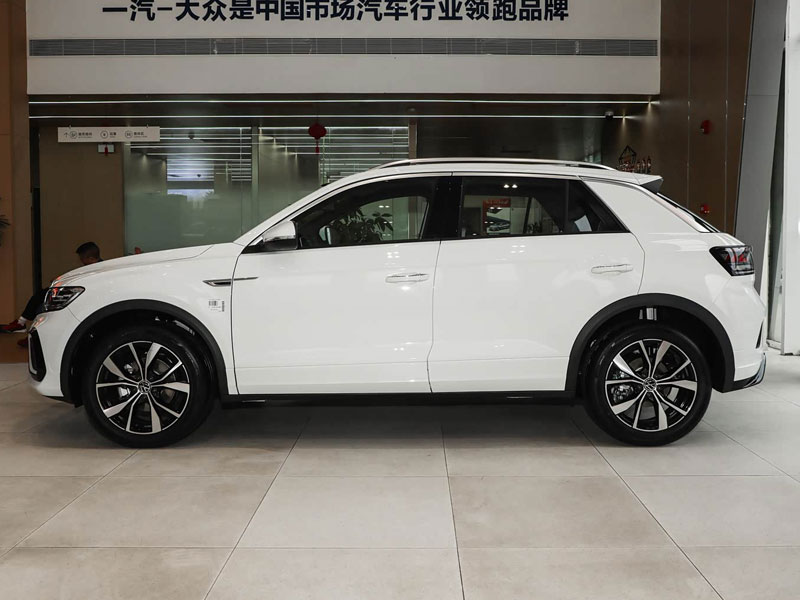
The T-ROC is the first compact SUV launched by Volkswagen in the Chinese market, based on the MQB A1 platform. It is positioned as "the first Volkswagen SUV for young people", aiming to offer German driving quality and stylish design at a relatively affordable price.
| Item | Parameter |
|---|---|
| Vehicle Positioning | Compact SUV (Entry-level/Sporty) |
| Length x Width x Height (mm) | 4336(4319) x 1819 x 1592 (Length varies slightly due to front/rear bumper design) |
| Wheelbase (mm) | 2680 (Volkswagen's classic "short overhangs, long wheelbase" design offers high space efficiency) |
| Curb Weight (kg) | Approx. 1380 - 1485 |
| Fuel Tank Capacity (L) | 51 |
| Trunk Volume (L) | 401 (Conventional) |
| Minimum Ground Clearance (mm) | 152 |
| Drive Type | Front-engine, Front-wheel-drive (FF) / Front-engine, Four-wheel-drive (4MOTION) |
| Front Suspension | MacPherson Strut Independent Suspension |
| Rear Suspension | Multi-link Independent Suspension |
Key Point: Compared to many joint-venture competitors at similar price points (e.g., Toyota Frontlander/Corolla Cross), the T-ROC's rear multi-link independent suspension is one of its core advantages, theoretically offering better handling stability and ride comfort.
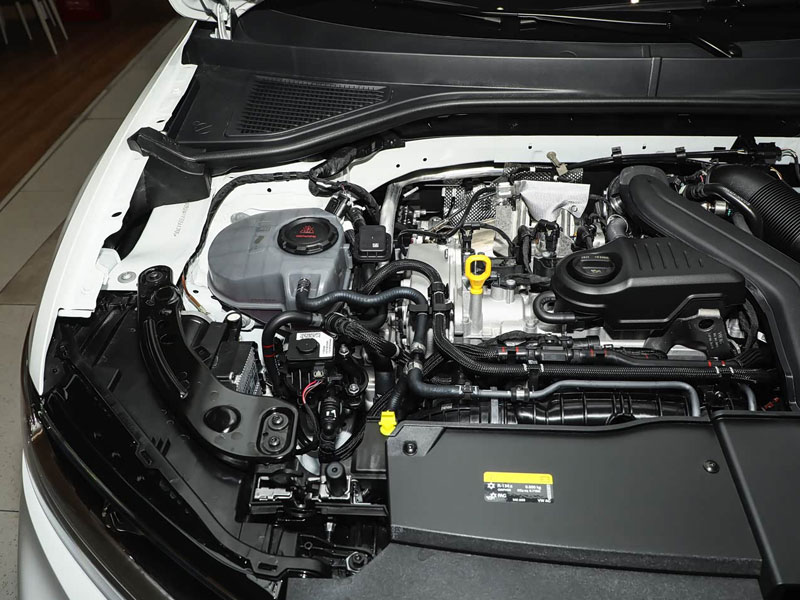
The T-ROC currently offers two turbocharged engines as its mainstay, both paired with a DSG dual-clutch transmission.
| Item | 1.4T Turbo + 7-Speed Dry Dual-Clutch (DSG) | 1.5T Turbo + 7-Speed Dry Dual-Clutch (DSG) |
|---|---|---|
| Engine Model | EA211-DJS | EA211-DSV |
| Max Power | 110 kW / 150 Ps @ 5000-6000 rpm | 118 kW / 160 Ps @ 5500 rpm |
| Max Torque | 250 N·m @ 1750-3000 rpm | 250 N·m @ 1750-4000 rpm |
| Transmission | 7-Speed Dry Dual-Clutch Transmission (DQ200) | 7-Speed Dry Dual-Clutch Transmission |
| Combined Fuel Consumption (WLTC) | Approx. 6.4 L/100km | Approx. 6.1 L/100km (More advanced technology, lower fuel consumption) |
| Fuel Grade | 95 Octane | 95 Octane |
| Features | Proven technology, direct power response, high market share. | New 1.5T EVO2 engine with more advanced technology (VTG variable geometry turbo, Miller cycle, etc.), offering slightly improved power and fuel economy. |
Note: Earlier T-ROC models also had a 1.2T version, but the mainstay now is 1.4T and 1.5T. All models require 95 octane gasoline, resulting in slightly higher operating costs compared to Japanese competitors that use 92 octane.
The T-ROC's configuration reflects Volkswagen's pragmatic style, with higher trim models offering stronger tech appeal.
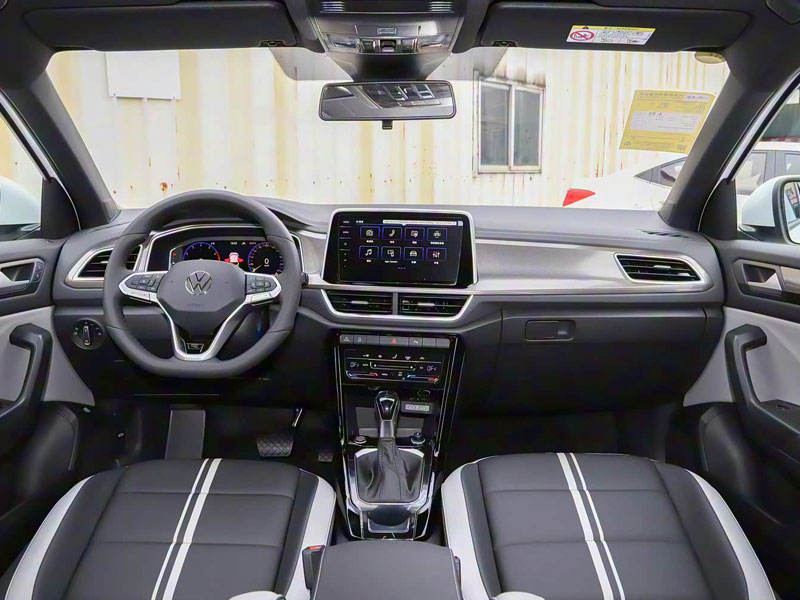
Digital Cockpit:
Mid-to-high trim models feature a 10.3-inch full digital instrument cluster (Active Info Display) and a 9.2-inch central touchscreen.
Equipped with the CNS 3.0 intelligent infotainment system, supporting CarPlay/CarLife/native smartphone connectivity.
Ambient lighting (up to 30 colors) is one of the interior highlights, enhancing the youthful feel.
Driver Assistance Systems:
High trim models offer Travel Assist full-journey driving assistance system, including:
ACC 3.0 Advanced Adaptive Cruise Control
Lane Keeping Assist
Front Assist pre-collision safety system, etc., enabling L2-level assisted driving.
Note: These advanced assistance features are not standard across all trims and are mainly concentrated in high trims or optional packages.
Practical and Comfort Features:
A large Panorama sunroof (which can be opened) is a highlight feature.
Electronic parking brake+AutoHold, Beats audio system (on some models), three-zone automatic climate control, etc.
Interior materials are decent, with a mix of hard plastics and soft-touch materials.
German Driving Experience: Solid chassis (rear multi-link), precise steering, excellent high-speed stability, outstanding driving pleasure for its class.
Efficient Powertrain: The 1.4T/1.5T+DSG combination offers fast power response and high transmission efficiency, especially the new 1.5T engine features advanced technology.
High Space Efficiency: The 2680mm wheelbase provides excellent rear legroom, exceeding expectations for its body size.
Stylish Design: Lively exterior colors and ambient lighting in the interior cater more to young tastes.
Operating Costs: Requires 95 octane gasoline. Also, the durability and smoothness of the dry dual-clutch transmission in extreme stop-and-go traffic remain a concern for some consumers (despite the technology being very mature).
Interior Luxury Feel: Compared to domestic Chinese cars at similar price points, it does not have an advantage in interior tech feel and the use of premium materials.
Feature Distribution: Core tech and driver assistance features are mostly concentrated in mid-to-high trims. Lower trims are relatively basic and offer poor value for money.
Rear Central Tunnel: A characteristic of the Volkswagen MQB platform, affecting comfort for the middle rear passenger.
Target Audience: Young consumers or small families who value driving quality, chassis stability, and brand prestige.
Powertrain and Trim Selection:
For Value: Choose the 1.4T Chenguang or Xingguang trims, which already have a decent set of core features.
For New Tech and Slightly Better Experience: The 1.5T models are recommended, offering slight optimization in fuel consumption and power.
For Four-Wheel Drive and Off-road Capability: Choose the 300TSI DSG 4WD Xingguang trim.
Key Competitors:
Joint-Venture Rivals: Toyota Frontlander/Corolla Cross, Honda XR-V/HR-V, Nissan Qashqai. The T-ROC wins in driving dynamics and chassis, but loses in fuel adaptability and value-for-money of base configurations.
Strong Domestic Rivals: Geely Boyue L, Haval Big Dog, BYD Song Pro, etc. Domestic cars have huge advantages in size, features, and smart tech, while the T-ROC is stronger in brand and mechanical refinement.
Conclusion: The Volkswagen T-ROC is a typical "driver's car" oriented entry-level joint-venture SUV. It sacrifices some theoretical durability in extreme conditions and low fuel grade adaptability in exchange for leading driving pleasure and German solidity in its class. If you love driving, value high-speed stability and handling feedback, and can accept its operating costs, then the T-ROC is a highly distinctive choice. Conversely, if ultimate reliability, fuel efficiency, and high features are your primary needs, then Japanese or domestic SUVs at similar price points may be more suitable for you.